
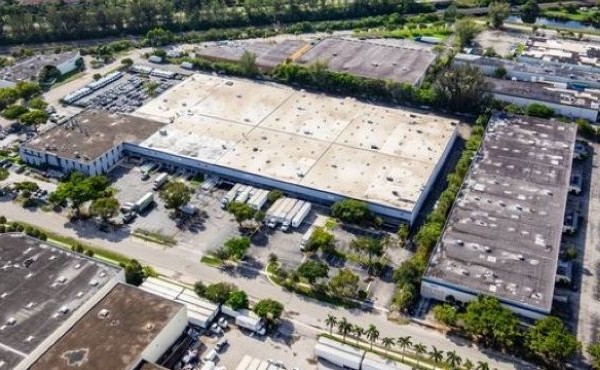
South Carolina’s industrial market continues to benefit from manufacturing growth, logistics activity and expanding demand from companies seeking strategically located facilities across the Southeast. However, the state’s supply of industrial space is increasingly divided between newer, highly sought-after buildings and older properties that may no longer satisfy the requirements of today’s tenants.
That divide could create an opportunity for investors.
Rather than competing exclusively for newly constructed Class A warehouses, some buyers may find greater potential in acquiring older industrial properties at a more favorable basis and repositioning them for modern manufacturers, distributors and local service businesses.
The opportunity is not simply to renovate an aging warehouse. It is to identify buildings with strong locations and usable structural characteristics, then make targeted improvements that materially expand their tenant appeal.
Older Buildings Account for Much of the Vacancy
Columbia offers a particularly clear example of the divide within South Carolina’s industrial inventory.
More than 90% of the Columbia market’s vacant industrial space was located in buildings constructed before 2000 during the first quarter of 2026, according to Colliers. At the same time, demand for modern space remained strong enough to push average Class A rents up 16.4% year over year to $7.31 per square foot. Most of the market’s remaining Class A vacancies were either under negotiation or expected to lease quickly.
Those figures suggest that Columbia does not necessarily have a broad industrial-demand problem. Instead, the market may have a mismatch between the buildings tenants want and the properties currently available.
A building constructed several decades ago may have a desirable location, highway access and a strong labor pool, but still struggle because of limited clear height, insufficient electrical capacity, inadequate loading, an aging roof or an inefficient interior configuration.
For an investor, that mismatch can create the basis for a value-add strategy.
Modernization Does Not Always Require Complete Redevelopment
Not every older industrial property can be converted into a modern distribution center. Some buildings have physical limitations that cannot be economically corrected.
Others, however, may need only a focused capital-improvement program.
Potential upgrades can include:
- Roof replacement or repair
- LED lighting and energy-efficiency improvements
- Expanded electrical service
- Additional dock-high or drive-in doors
- Improved truck courts and trailer parking
- Fire-suppression system upgrades
- Resurfaced parking and loading areas
- Updated office areas, restrooms and employee facilities
- Improved ventilation, cooling or climate-control systems
- Subdivision into smaller, more leasable suites
The right improvements depend on the building’s intended users. A local contractor, light manufacturer, service company or regional distributor may not require the specifications of a newly built bulk warehouse. Those tenants may instead prioritize location, affordability, functional loading and the ability to occupy space quickly.
That distinction is important. The most successful value-add project may not be the one that attempts to compete directly with new construction. It may be the property repositioned to serve a tenant segment that new development does not address economically.
Tightening Supply Could Support the Strategy
Conditions in the Greenville-Spartanburg market also illustrate why functional older properties may deserve a closer look.
The Upstate recorded 2.4 million square feet of positive net absorption during the second quarter of 2026, while vacancy declined to 5.3%, according to CBRE. Industrial construction was also down significantly from the previous year, with 2.1 million square feet underway. Manufacturing activity remained one of the market’s primary demand drivers.
Earlier market research found that Greenville-Spartanburg had absorbed much of the modern bulk inventory delivered during the recent construction cycle. Developers were increasingly focusing on selected building sizes and build-to-suit opportunities rather than launching another broad wave of speculative development.
As available Class A inventory tightens, tenants that cannot wait for new construction may reconsider well-located Class B properties—provided those buildings can meet their operational requirements.
This does not mean every older warehouse will benefit equally. Properties in isolated areas or with serious functional deficiencies may continue to struggle. Colliers noted that rural and aging properties were among the most challenged segments of Columbia’s industrial market.
Location and building fundamentals therefore remain critical.
What Investors Should Evaluate
Before pursuing an older industrial acquisition, investors should examine more than the property’s current occupancy and asking rent.
Replacement Cost
The cost of constructing new industrial space can help support the value of an existing building, particularly when the property can be acquired and improved for substantially less than replacement cost.
Power Availability
Electrical capacity has become increasingly important for manufacturers, cold-storage operators and other power-intensive users. Investors should determine whether existing service can be expanded and how long an upgrade would take.
Loading and Circulation
A property may have adequate square footage but still be difficult to lease if trucks cannot maneuver efficiently. Dock configuration, truck-court depth, trailer storage and access points should be evaluated early.
Clear Height and Column Spacing
These features are often difficult or impossible to change. Investors should match the building’s physical characteristics with tenant categories that can realistically use the space.
Environmental Conditions
Older manufacturing facilities may require environmental assessments and remediation. The cost and timing of that work can significantly affect the investment.
Ability to Divide the Building
A large building with limited demand from single users may become more marketable when divided into smaller spaces. However, subdivision may require additional entrances, utilities, fire separations, loading areas and parking.
Local Tenant Demand
A successful renovation must be based on identifiable demand. Investors should understand which tenant sizes and uses are active in the immediate submarket before determining the scope of improvements.
Charleston Requires a More Selective Approach
Charleston’s industrial market presents a somewhat different picture.
The region experienced a major wave of construction between 2022 and 2025, expanding its industrial inventory by nearly 35%. Development is now slowing, while demand for larger distribution facilities has improved. However, smaller properties in the 10,000- to 20,000-square-foot range have experienced softer demand.
That means a value-add strategy in Charleston may require greater selectivity. Investors should avoid assuming that every smaller industrial building will benefit from the market’s port and population growth.
A property’s location, tenant profile and competitive set may matter more than the broader market narrative.
The Opportunity Is in Solving Obsolescence
South Carolina’s aging industrial inventory presents both a challenge and an opportunity.
Older properties frequently carry deferred maintenance, operational limitations and greater leasing risk. But they may also provide locations, land coverage and acquisition pricing that are difficult to replicate through new development.
For investors with local market knowledge and disciplined underwriting, the opportunity lies in determining which forms of obsolescence can be corrected—and which cannot.
A structurally sound building near major transportation routes, employment centers and growing population areas may have considerable potential after the right improvements. A poorly located property with inadequate power, limited loading and an inefficient layout may remain obsolete regardless of renovation spending.
As modern industrial availability tightens in markets such as Columbia and Greenville-Spartanburg, functional older buildings could become increasingly relevant. The strongest value-add opportunities will likely be properties where targeted capital improvements can close the gap between aging inventory and the practical needs of South Carolina’s next generation of industrial tenants.